

Oysters as nature-based solutions
Climate change is rapidly altering our environment, putting billions of people at risk of severe weather and climate events. Massachusetts is no exception.
From 1980-2024, weather and climate disaster events cost the commonwealth an estimated $10 billion to $20 billion.
Nature-based solutions
Nature-based solutions are among the various tools in the toolbox to combat climate change. These are policies and actions focused on harnessing the power of nature to address climate change through the preservation, restoration, and sustainable management of ecosystems.
A unique aspect of nature-based solutions is that they can tackle many parts of the climate crisis simultaneously. The threat of climate change isn’t just about rising global temperatures—it also involves losing biodiversity, eroding coastlines, and reducing fresh water supplies for communities near the water. By using nature-based solutions in the fight against climate change, we can address several harmful causes and effects at once, rather than just one in isolation.
Harnessing the power of oysters
Oysters and oyster habitats have been recognized globally as an important nature-based solution, with major organizations such as The Nature Conservancy and the World Wildlife Foundation engaging in oyster reef restoration projects. What’s exciting is that these projects are working.
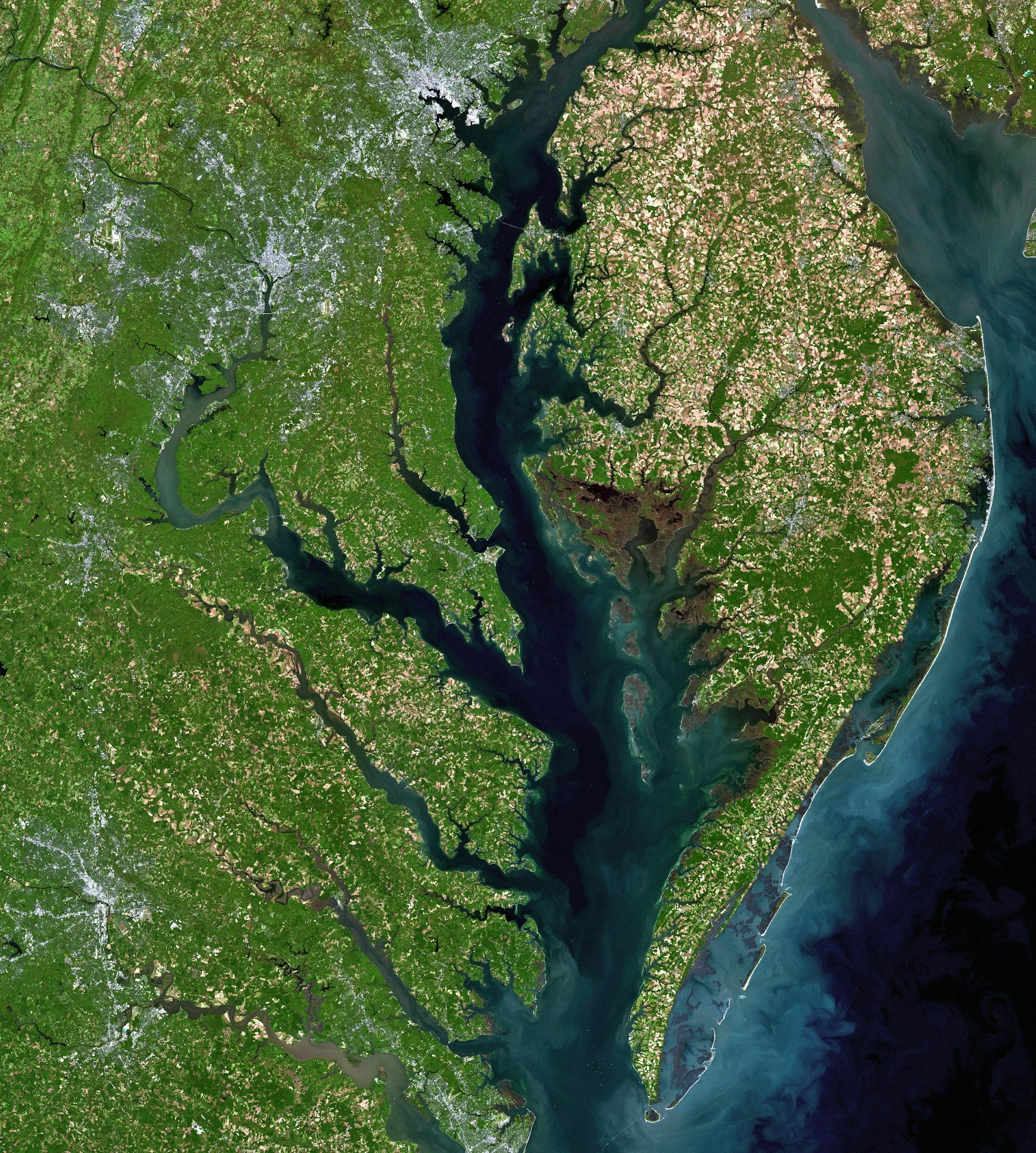
One example can be found in the Chesapeake Bay. In 2014, the Chesapeake Bay Watershed Agreement was signed by several conservation groups, state agencies, and others to improve water quality, support marine life, and promote climate resilience. Among these efforts was the restoration of naturally occurring oyster habitats. Since its signing, more than 2,200 acres of oyster habitat have been restored.
Oyster biology
What makes oysters such a powerful tool in fighting climate change? Their biology.
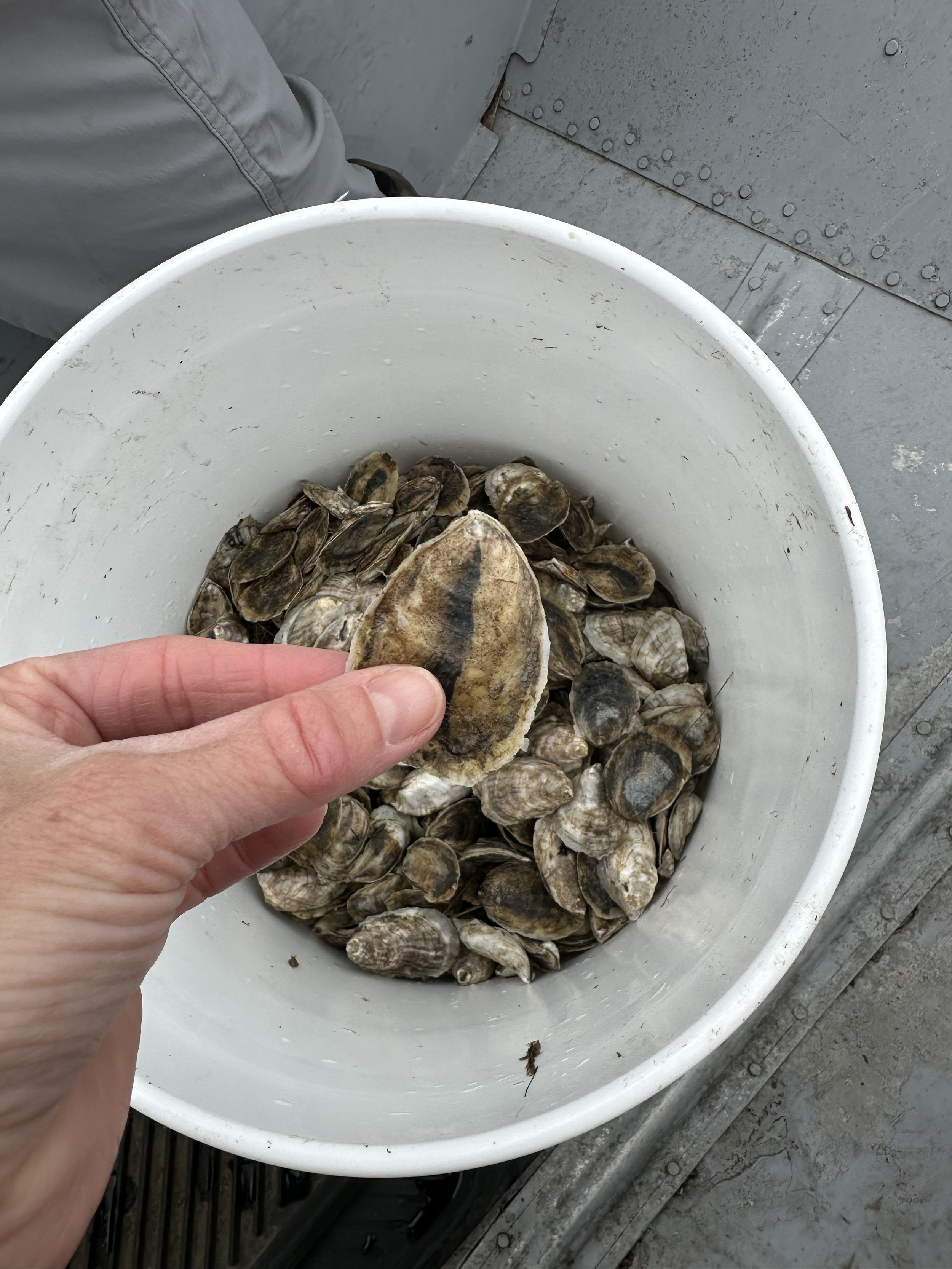
Oysters are filter feeders, with a single oyster filtering up to 50 gallons of water each day. They consume algae, nutrients, and other particles from the water, helping to clean the water for the ecosystem. As they grow, they store and process these nutrients in a way that benefits the surrounding environment.
For instance, excess nitrogen from fertilizer runs into the water, providing nutrients for harmful and invasive algae to grow. These algae can block the sun that other, native marine plants need to grow, effectively killing off these other crucial species and contributing to ocean acidification. Fortunately, oysters consume this nitrogen as well, helping to offset the harmful effects of nitrogen runoff where they live.
Oyster shells are also made from calcium carbonate - so as oysters grow they remove carbon from the atmosphere.
Oyster reefs
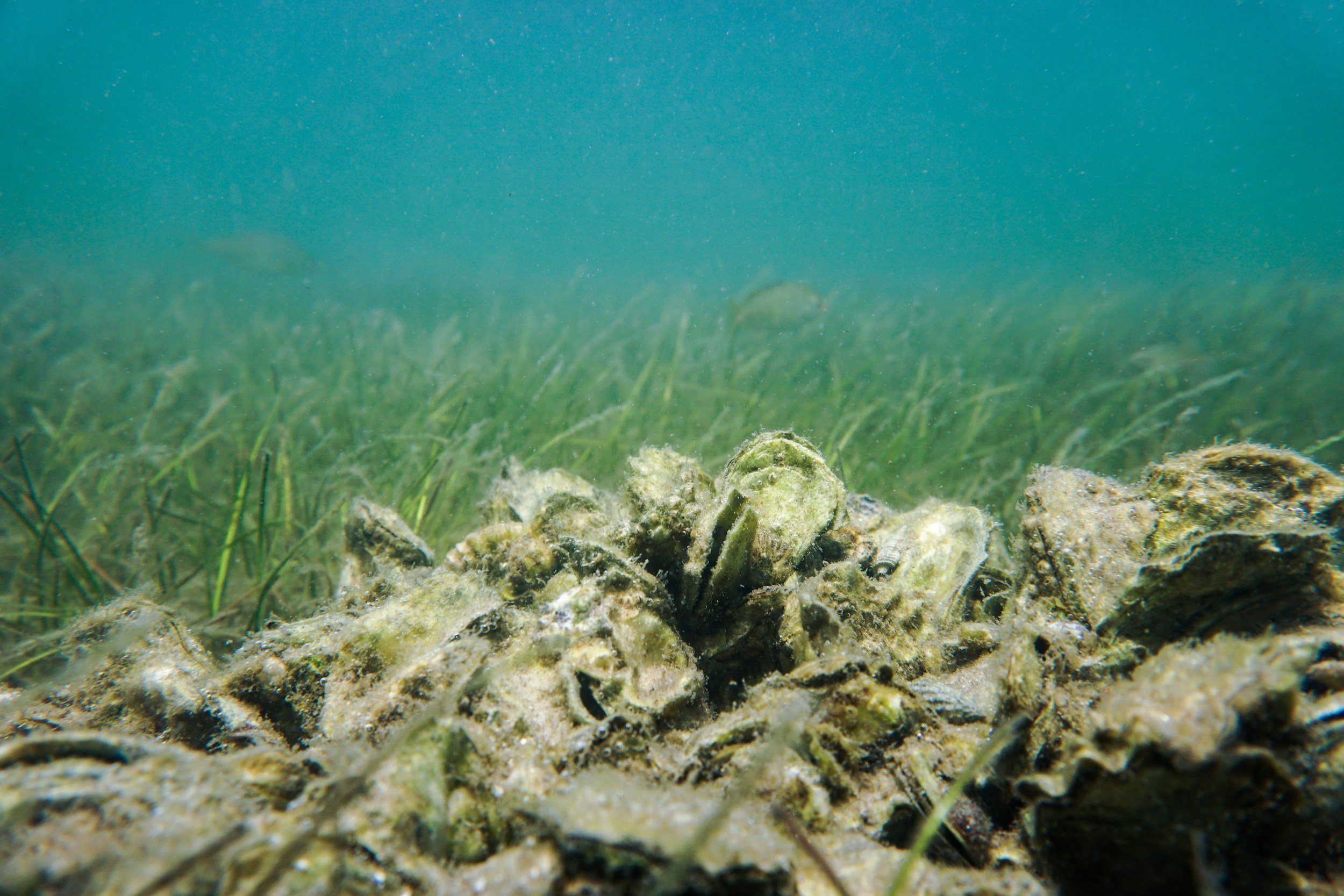
Oysters naturally live in clusters, forming reefs as they grow. Once baby oysters have fastened to an existing colony, they’ll remain there for the rest of their lives.
As a result, the advantages of their biology increase with each new generation born and attached to the reef. A single square yard of oyster reef can hold an estimated 5,895 oysters, all filtering the surrounding water.
These reefs don’t just filter water, but provide other benefits as well. They provide habitats for other marine life. For example, smaller fish may take shelter in the nooks and crannies of an oyster reef, seeking protection from larger fish.
Reefs can also prevent erosion from coastal storms in two ways. The first is by dampening the impact of storm surges. These reefs act as natural breakwaters by absorbing the energy of waves coming ashore. As such, the effect of the waves reaching shore is lessened, preventing greater damage. Additionally, the reefs can stabilize the sediment around them, thereby preventing further erosion.
In August 2025, Governor Maura Healey unveiled a 25-year plan to protect and restore nature throughout Massachusetts.
This plan includes efforts to restore marine, and specifically oyster, habitat and accelerate the deployment of nature-based solutions. As this plan unfolds, the Massachusetts Oyster Project is excited to continue partnering with towns, governments, and other nature-based organizations to turn this plan into reality.